
Natural stone is often associated with kitchens, bathrooms and indoor spaces, but it can also be used beautifully outdoors.
From outdoor kitchens and entertaining areas to feature walls, pool surrounds and exterior surfaces, natural stone can help connect the inside of a home with the landscape around it.
But not every stone behaves the same way outside.
The important part is choosing the right stone, the right finish and making sure it is suitable for the conditions it will be exposed to.
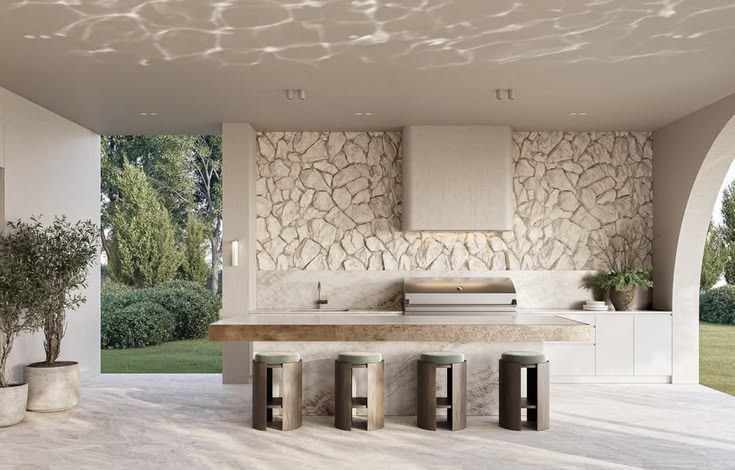
Not Every Natural Stone Performs the Same Outdoors
Natural stone is exactly that, natural. Different stones have different mineral compositions, densities and levels of absorption, which means their performance can vary.
This is why choosing a stone for an outdoor area should be based on more than appearance alone.
Quartzite can be a strong option for many outdoor applications because of its hardness and durability. However, the exact quartzite should still be considered for the intended use.
Marble can also be used outdoors, but it is important to understand that it may weather and develop more character over time. For some people, this natural ageing is part of its appeal.
Dolomite may be suitable for selected outdoor applications, although the particular stone and level of exposure should be considered carefully.
Granite is another natural stone commonly considered for exterior applications because many granites have low absorption and good durability.
Ultimately, the stone name alone does not determine whether it is suitable. The characteristics of the individual material and how it will be used are just as important. Industry testing for natural stone considers properties including absorption, strength, slip resistance and resistance to environmental exposure.
The Finish Matters Too
The finish you choose can make a big difference outdoors.
A highly polished surface may look beautiful, but it is not necessarily the right option for every exterior area, particularly somewhere that regularly becomes wet.
For flooring, pool surrounds and other walking surfaces, a more textured or slip-resistant finish may be more appropriate.
For outdoor benchtops, walls and vertical applications, there may be more flexibility depending on the stone and design.
There is no single finish that works for every project, so the application should always be considered alongside the material itself. Slip resistance is particularly important for exterior flooring and paving.
What About Sealing?
Sealing can help protect certain natural stones from moisture, oils, dirt and staining, but it is important to understand what a sealer actually does.
A penetrating sealer can make stone more resistant to liquids and staining, but it does not make the surface completely stain-proof or maintenance-free. Some stones may benefit from sealing more than others, and the appropriate product will depend on the stone and application.
For an outdoor kitchen or entertaining area, where the stone may be exposed to food, drinks, rain and everyday use, this can be particularly important.
Your stonemason or stone-care professional can advise on the right treatment for the specific material you have selected.
Natural Stone Will Change Over Time
One of the things to remember when using a natural material outdoors is that it is going to be exposed to the environment.
Sunlight, rain, moisture, dirt and everyday use can gradually change the appearance of the surface.
That does not necessarily mean something is wrong with the stone.
Depending on the material, it may develop a softer, more weathered appearance or natural patina as it ages.
For many homeowners, this is part of the beauty of choosing natural stone. Rather than remaining perfectly uniform, the material continues to develop character as part of the home.
Installation Is Just as Important as Stone Selection
Choosing the right slab is only one part of creating a successful outdoor stone installation.
Drainage, substrate preparation, adhesives, joints, water management and fabrication all need to suit the application.
This is particularly important around pools, outdoor kitchens and areas that receive significant exposure to water.
We always recommend discussing the intended application with your stonemason or installer before fabrication so they can confirm that the material, finish and installation method are appropriate for the project.
Where Can Natural Stone Be Used Outdoors?
Natural stone can be considered for a range of exterior applications, including:
- Outdoor kitchens and BBQ areas
- Entertaining areas
- Outdoor benchtops
- Feature walls and exterior cladding
- Pool surrounds
- Outdoor flooring
- Garden and landscape features
The right choice will depend on how exposed the area is, whether it gets wet regularly and how much wear the surface will receive.
So, Can You Use Natural Stone Outside?
Absolutely.
The key is not simply choosing a beautiful slab. It is choosing a natural stone that suits the environment, selecting an appropriate finish and making sure the installation has been properly considered.
If you are planning an indoor or outdoor project, visit our Alexandria showroom to view our natural stone slabs in person.
Our team can help you explore different marble, quartzite, dolomite and granite options and find a stone that works with the look you are trying to create.
Rex Marble supplies natural stone slabs only. We recommend involving your stonemason or fabricator early to confirm the suitability of your chosen stone for its intended application.