
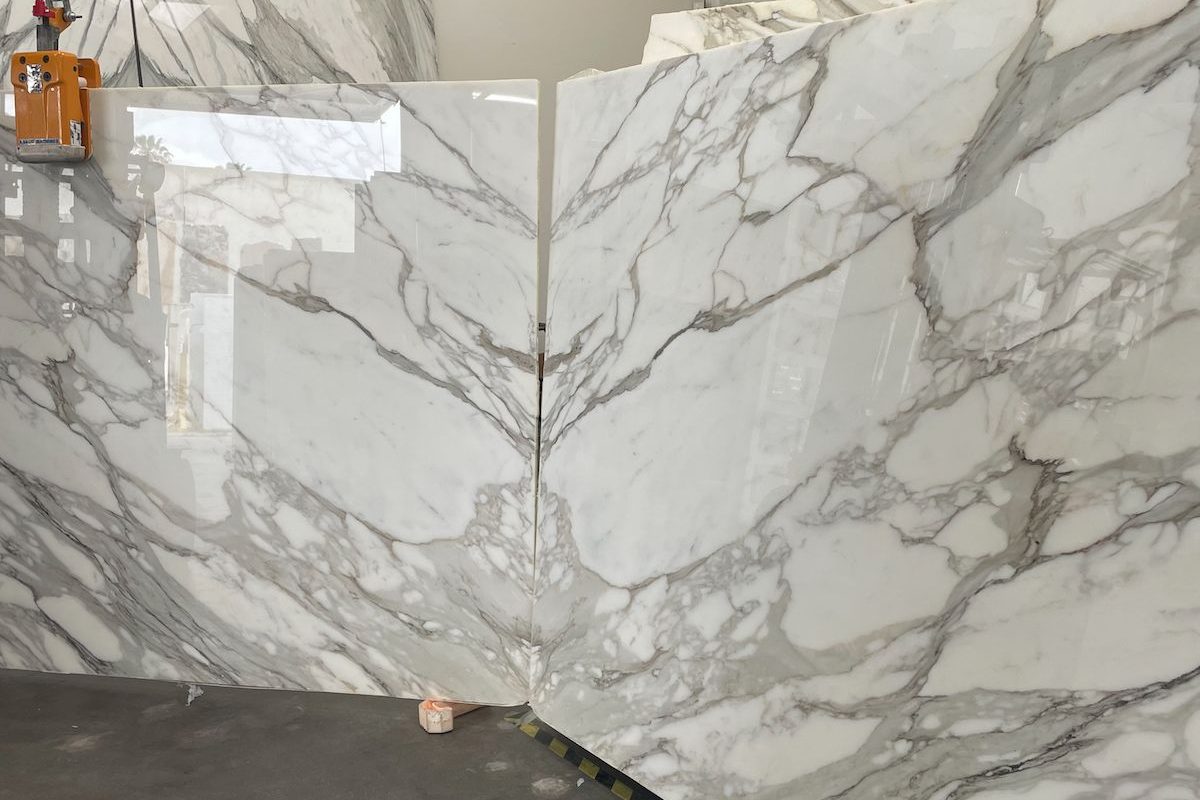
One of the most interesting things about natural stone is that two slabs with the same name can sometimes look surprisingly different.
One may have soft, delicate movement while another is much more dramatic. Colours can become warmer or cooler, veins can become stronger, and certain minerals may appear more prominently from one slab to the next.
This variation is not a flaw. It is part of the natural character of the material and one of the reasons selecting your individual slab is so important.
It starts beneath the surface
Natural stone is formed through geological processes over an incredibly long period of time. Its appearance is influenced by its mineral composition and the conditions in which the stone developed.
These conditions are not perfectly uniform throughout a quarry. As the composition of the stone changes, so can its colour, veining and overall movement.
This means different areas of the same natural stone can have their own personality while still belonging to the same material.
Every block tells a slightly different story
Stone is extracted from the quarry in large blocks before being cut into individual slabs.
One block may contain stronger veining and contrast, while another from the same stone may appear softer and more consistent. Even within a group of slabs, there can be subtle changes as you move through the block.
Natural stone is inherently connected to its quarry source, which is part of what gives individual materials their distinctive character.
Rather than expecting every slab to be identical, it is better to think of each one as an individual piece of the same stone family.
The way the block is cut matters too
The direction in which natural stone is cut can also influence how its pattern appears.
Depending on the orientation of the cut in relation to the stone’s natural structure, veining can appear longer and more directional or more open and varied. The material has not changed, but the way its internal movement is revealed has.
This is why the same stone can create very different visual effects from one selection to another.
Look beyond the stone name
A stone name is a useful starting point, but it should not be the only reason you choose a material.
If you love a particular Taj Mahal quartzite, marble or dolomite you have seen online, another shipment of that same stone may not look exactly the same. The overall character may be familiar, but the individual colour, movement and detail can vary considerably.
This is also why a small sample can only tell you so much. Seeing the complete slab gives you a much better understanding of its scale, veining and how it might work within your project. Rex Marble’s existing stone-selection guidance similarly recommends viewing full slabs because samples cannot show the complete movement and tonal variation of natural stone.
Choose the slab, not just the name
The variation between slabs is part of what makes working with natural stone so special.
Rather than searching for two pieces that look exactly the same, look for the slab whose colour, movement and character feel right for your space.
Visit Rex Marble’s Alexandria showroom to explore our natural stone collection and view the slabs in person.