
If you have been saving kitchen inspiration lately, there is a good chance you have seen Taj Mahal quartzite.
It is one of the most popular natural stones in our showroom at the moment, and it is not hard to see why. Taj Mahal has a soft, warm look that makes a kitchen feel elevated without feeling too formal or overdone.
People are drawn to the cream base, subtle movement and gentle beige tones. It feels light and timeless, but still has enough natural character to make a space feel special.
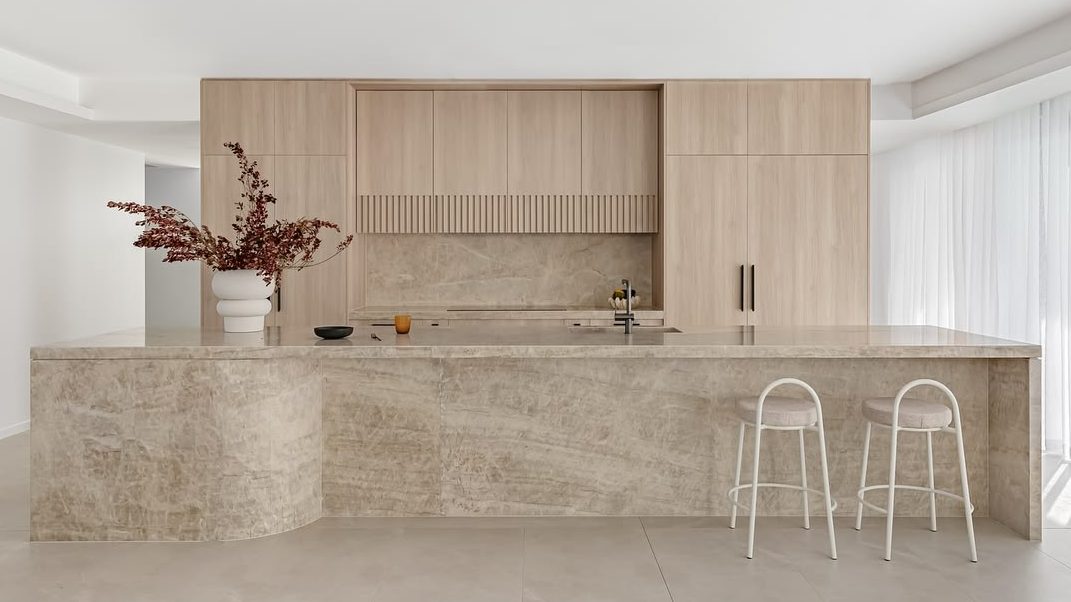
What Is Taj Mahal Quartzite?
Taj Mahal is a natural quartzite, not engineered quartz.
It is quarried from the earth and cut into slabs, with every slab having its own colour, movement and personality. Most Taj Mahal slabs have an ivory or creamy background with soft veins in beige, taupe, gold or light grey.
Some are very clean and quiet. Others have more movement running through them. That is exactly why it is important to view natural stone in person. The slab you select is the one that will become part of your home.
Why Do People Love Taj Mahal?
Taj Mahal works with so many of the finishes people are choosing now.
It looks beautiful with warm oak joinery, but it also works with dark timber, white cabinetry, brushed nickel, brass and black details. You do not have to build the whole room around it. Instead, it tends to pull the room together.
It is also softer than a bright white surface. For people who want a light kitchen but do not want it to feel cold, Taj Mahal is often the answer.
The look is relaxed, natural and refined all at once.
Each Slab Looks Different
One of the best parts of choosing Taj Mahal is finding the slab that feels right for your project.
You might prefer a very soft slab with minimal movement for a calm, simple kitchen. Or you may be drawn to a slab with stronger, flowing veins for a larger island or feature wall.
Natural stone is not meant to be perfectly uniform. The slight shifts in colour, veining and depth are what give it warmth and make it feel different from a manufactured surface.
When you visit the showroom, it helps to bring your cabinetry, tile, flooring or paint samples. Looking at everything together makes it much easier to see which slab suits the overall feel you are creating.
Using Taj Mahal in a Kitchen
Taj Mahal is most often used for kitchen benchtops, islands and splashbacks.
It can look beautiful as a simple benchtop paired with tiled splashbacks, but it is equally striking when continued up the wall as a full-height stone splashback. For a larger kitchen, using it on a waterfall island can make the stone a real feature without making the space feel too busy.
Before fabrication, your stonemason should plan the layout carefully. This is especially important if you want the veining to run through your benchtop, splashback or waterfall edge in a considered way.
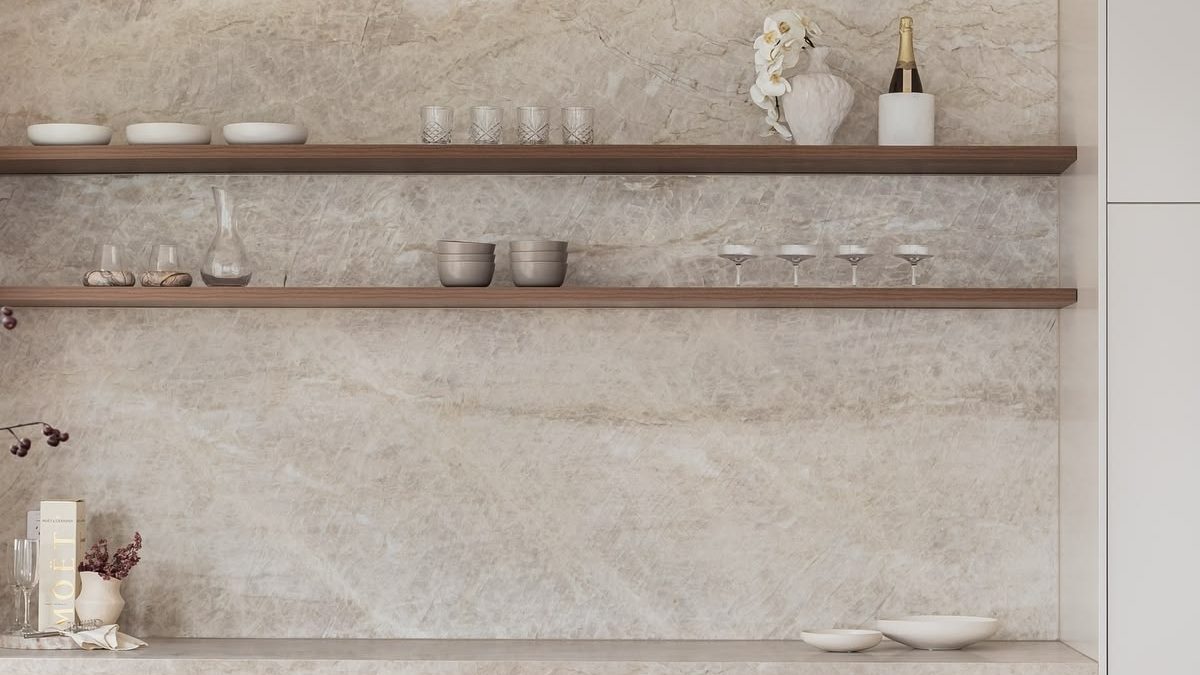
It Is Not Just for Kitchens
Although Taj Mahal is most recognised in kitchens, it is also a beautiful choice for other parts of the home.
A Taj Mahal vanity can make a bathroom feel calm and luxurious. It can work on a laundry benchtop, around a fireplace or as a feature in custom joinery. Because the tones are neutral, it gives you flexibility as your style changes over time.
It is the type of stone that does not need to compete for attention. It simply brings warmth and quality to the space around it.
Choosing Your Taj Mahal Slab
There is no single “best” Taj Mahal slab. The right one is the slab that works with your layout, your finishes and the feeling you want your home to have.
When selecting your slabs, think about:
• Whether you prefer a cleaner look or more natural movement
• How warm or light you would like the stone to feel
• Where the strongest veining will sit in your finished layout
• Whether the stone will continue over a waterfall, splashback or wall
• How it looks beside your joinery and other finishes
Your stonemason can then help plan the cutting and joins once your slabs have been selected.
Visit Our Taj Mahal Collection
At Rex Marble, we have one of Sydney’s largest Taj Mahal quartzite collections, with a range of different slab designs available to view in our Alexandria showroom.
If you are considering Taj Mahal for your kitchen, bathroom or renovation, we recommend coming in to see the slabs properly. Bring your plans and samples, take your time looking through the options and choose a slab that feels like it belongs in your home.
Rex Marble supplies natural stone slabs only. We recommend involving your fabricator or stonemason early so your final slab layout can be planned before fabrication.
Frequently Asked Questions
- Is Taj Mahal quartzite or marble?
- Taj Mahal is a natural quartzite. It is not marble and it is not engineered quartz.
- Why does Taj Mahal look different in photos?
- Lighting can change how any natural stone looks in a photo. There are also natural differences between slabs, including the background colour, warmth and amount of veining. Viewing your chosen slab in person is always best.
- Can Taj Mahal be used for a kitchen island and splashback?
- Yes. Taj Mahal is often used across kitchen benchtops, islands and splashbacks. Speak with your stonemason about the best slab layout for your design.
- Can I use Taj Mahal in a bathroom?
- Yes. It is a popular choice for bathroom vanities and stone wall features, especially when you want a soft, warm and refined finish.
- How should I care for Taj Mahal quartzite?
- Use a mild, pH-neutral stone cleaner or soap and water. Wipe spills promptly and avoid harsh or abrasive cleaning products. Your stonemason can advise on sealing and ongoing care for your particular application.